I’m fascinated by the human need to have a ‘right or a wrong’ when, to me, everyone has a very different perspective and lens.
Rebecca wicker | The strategic linguist, 2026
1
TELL US ABOUT YOU.
Something I could tell early on in my writing was that people assumed I knew everything about language or that I could just use words better than most. After revealing more about myself to my readers, I feel like that perception is changing.
I am not linguistically immune to the power struggles I write about.
I am still talked over, dismissed, given feedback about my personality. I’m also not in academia, I don’t have a PhD and my own research budget. I know enough to be dangerous but it’s not my full-time job. The value of my work is that I bring the two worlds together: business and linguistics. No one else does that.
Just because I know how the language works doesn’t mean it’s any easier to take when it’s angry, confrontational or rude. it just gets easier to read, and I don’t immediately blame myself for not saying the right thing in the right way.
If someone is determined to not understand you, there’s nothing you can say to make them magically hear you or understand you.
I hate that people think there’s a perfect way to say something, because there isn’t. People change their moods, their outlooks, their perceptions all the time, you’re not in control of that in any way.
That to me is what I want to be able to teach others because a lot of us do that.
2
how does the cover photo capture who you are?

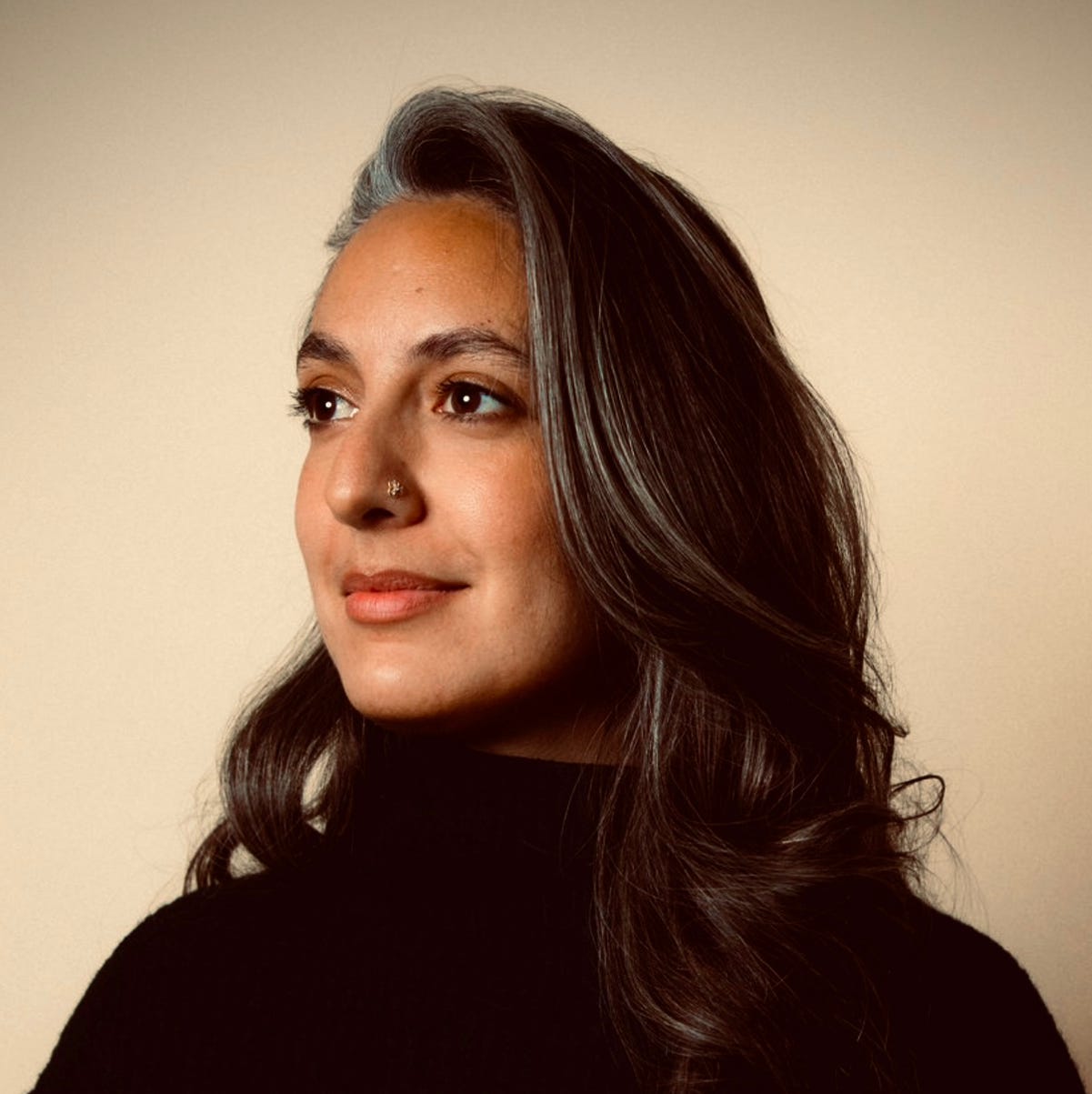
This is from a shoot I did recently to update my headshots.
I chose this photo because I feel like this represents who I truly am.
I think a lot about identity, particularly the self (past selves, future selves) because I have had so many lives in a relatively short time.
I’ve had a lot to overcome, and I’ve been chasing a perfect version of who I thought I needed to be.
For a few years, I was a full time model in Sri Lanka and India.
I’ve walked runways for designers like Rohit Bal and Tarun Tahiliani, seen my face on billboards and covers of magazines and newspapers, and it’s never really felt like me. It always felt like she was someone else. It’s been a version of me.
If I was to tell you who I’ve always wanted to be, it’s this version.
I’ve finally caught up to my future self, who’s been here for a while.
3
In one sentence, what are you trying to change?
I am trying to change The perception of language.
4
What did you notice was broken that made you start writing?
My Masters was called “Applied Linguistics” and I always wondered why it wasn’t applied to more things outside of education.
I basically did two Masters degrees—the one I signed up for which was about second language acquisition, teaching and testing . . . and social power, linguistic identity and corporate communication.
I was reading a lot on my own, testing my ideas in class and eventually seeing it all in the workplace once I graduated.
It has been abundantly clear to me that few people care about language the way I do. I wanted to open up a world to others to see the world the way I do.
5
If you could manifest a brighter tomorrow, what would change by 2030?
One where people understand that different doesn’t mean wrong.
I’m fascinated by the human need to have a ‘right or a wrong’ when, to me, everyone has a very different perspective and lens.
Sometimes they’re the same, sometimes they’re not but no one is wrong. It’s a reflection of their experiences, not everyone has the same exposure to all of what life has to offer.
From style to taste to schools of thought, to me, no one is right.
We’re all just figuring our shit out together, and the more accepting we are of that, the better.
6
How would your closest friends describe you?
Extremely particular, kind, loyal, funny, authentic.
Most people assume I’m an extrovert but I am very much an introvert. Being around too many people drains me, so the people I have close are ones who make me feel seen, heard, and safe.
7
What’s a challenge that changed how you see the world?
It’s supposed to be something I should celebrate, but being from both Sri Lanka and the UK has been incredibly challenging.
And not because my parents are from two opposite ends of the world, but because I’ve spent my life living in both countries. I truly am half of each. I joke that I have tea running through my veins since it’s both a very Sri Lankan and very English thing.
It’s shaped how I’ve seen and moved through the world, particularly the civil war that raged for most of my life from 1983-2009.
Not many people know about the violence the island has witnessed. There are experiences I’ve had that will never leave me that few people can understand.
Being both, being half, being neither, means that people don’t see me as someone who’s experienced trauma from conflict and violence, which makes it even more challenging.
I feel like I have to prove the scars I have so I just don’t talk about it. It’s why I want to write a book about it.
People hear how I sound and see what I look like, and make a lot of wrong assumptions. I’ve actually been challenged by people who don’t believe me as if I’ve misremembered who I am and where I’ve come from.
Linguistics isn’t just theory to me. Linguistic identity is something I live and breathe every day.
8
What are you most proud of right now?
How far I’ve come on Substack. I never ever thought I’d have ever written this much about this topic in front of all these people a year ago.
9
On hard days, what kind of signal from your readers keeps you going?
Honestly, I still don’t think a lot of people understand the power of language. It often still feels like I’m talking to myself despite the reach I have.
I love hearing how my work has helped people, no matter what form that comes in. It makes me have hope that some people care about what I do.
10
WHAT ARTICLE WOULD YOU WANT YOUR New Readers TO READ FIRST?
“Language: when you have to fill in the gaps.”
It was the first post I wrote that was about me and my journey with language and identity. It’s quite personal and I felt very vulnerable writing about some things I usually keep quite close to my chest.
But I’ve set out to write the stories that I don’t see written, about people like me, and in order to build that work, I have to brave enough to write it.
Did I grow up seeing persuasion, influence, negotiation, conflict, power and authentic leadership? Ha. No. I saw a lot of demands, hidden agendas, silent treatment and asserting of dominance.
I won’t go into how this was communicated at an all-girls boarding school in Dorset but if you’ve read Lord of the Flies, you’ll have a fair idea.
Did I learn how to do it? Yes but only to keep myself safe as a child – and those skills shouldn’t be necessary in the working world.
If you could recommend another writer to be featured on Not Rising, who would it be ?
Jade the Hooman.
There are a few people on Substack I will really listen to because I can see how thoughtful and purposeful they are with what they read and write.
Jade is definitely someone I always pay attention to.

