“If the internal system is compromised, no amount of external effort can compensate.”
Farida Khalaf | Author of Lights On
1. Tell us about you.
I am Farida Khalaf, an Egyptian/American currently living in Mexico.
Just don’t confuse me with the Yazidi woman, Farida Khalaf, the author of The Girl Who Escaped ISIS. While our paths have crossed and I am familiar with her public work, I am a different Farida.
I am an economist by degree and a Data Engineer by profession, with a deep passion for cybersecurity. This intersection is the DNA of my work. I don’t just see news, I see data flows. I don’t just see chaos, I see a system with a security breach.
My writing is the result of my love for dissecting data and connecting the knots that others often miss. I believe passing knowledge is the best thing we can do for one another.
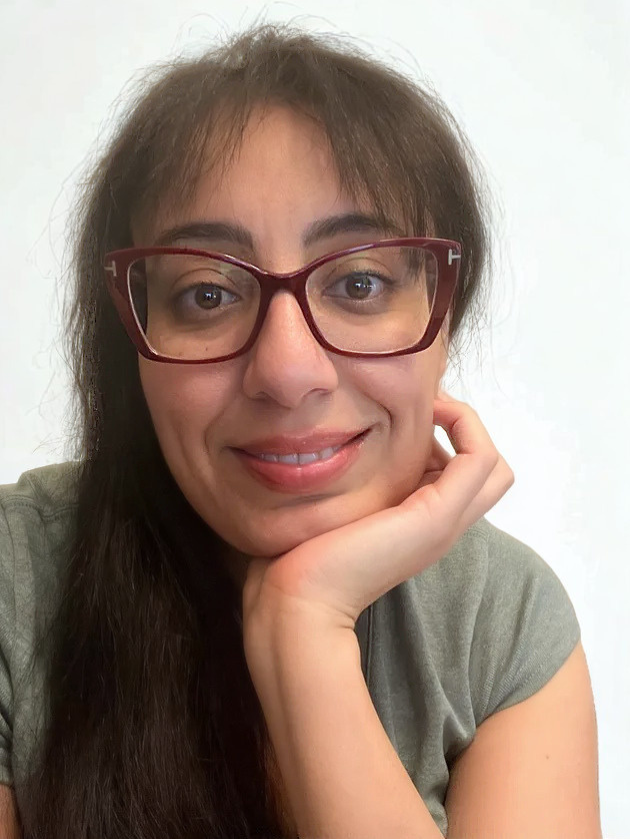
2. How does the cover photo capture who you are?

I chose this selfie because it captures the “Observer.”
Living between cultures, Egypt, the US, and now Mexico, has taught me to look for the universal protocols that run beneath the surface.
It represents the quiet focus required to filter the noise and find the signal.
3. In one sentence, what are you trying to change?
I want to move the conversation from emotional reaction to structural understanding, stripping away the unknown that creates anxiety, so that people can make their own judgments with clarity and confidence.
4. What did you notice was broken that made you start writing?
I saw a world drowning in signal, hype, trends, and political theater, while the foundations (economics, trust, and productivity) were rotting in plain sight.
We live in an era that provides tons of information without verification, often steered by biased intentions.
I noticed that media is being well-engineered to divide us and create gaps.
I started writing to shed light on the intricacies and nuances, giving people the tools to choose for themselves instead of being manipulated by the noise.
I’m turning the lights on in a room where everyone has been forced to argue in the dark
5. If you could manifest a brighter tomorrow, what would be different by 2030?
By 2030, I hope we have moved toward valuing institutional bedrock over temporary hype. But more importantly, I hope we manifest a deeper empathy.
As we move into an era of AI and robots, our greatest challenge is to remain a cohesive society.
I want to see people believing in their own agency again, building trust and bridges between one another instead of walls and devices.
We need to build engines of productivity, but we also need to learn how to be better humans for the ‘better good’ of the collective

6. How would your closest friends describe you?
They’d call me the eternal optimist. I am a Libra who always sees the filled part of the cup.
People who work with me calls me the Maverick: an innovative, outside-the-box thinker who is completely undaunted by failure.
My friends know that my grit is contagious; I don’t just debug problems, I look for the hidden opportunity within the data to build something better.

7. What’s a challenge that changed how you see the world?
Ten years ago, I was diagnosed with Crohn’s disease, an autoimmune challenge that forced me to completely re-evaluate my life.
The journey to get my health and my life back to order was a pivotal turning point; it completely shifted my priorities and my definitions of success.
It taught me that if the internal system is compromised, no amount of external effort can compensate.
This personal battle mirrored what I saw in the macro world: that ‘doing good’ and ‘doing right’ are often at odds.
It taught me that empathy without structure is often a disaster. You have to fix the foundation first.
8. What are you most proud of right now?
I am incredibly proud of my creative momentum right now.
I just published my book, Women to Remember, and I co-authored two chapters of AI Everywhere Vol. 1, which just launched this month.
I’ve already started work on my third book, a collaboration with Mila Agius (we didn’t choose a title yet.)
Beyond the books, I’m proud of building a community that doesn’t just agree with me, but challenges me.
When a reader pushes back with a structural argument, it means the ‘Lights On’ philosophy is actually working.
I truly enjoy the process of writing; for me it’s about creating a shared language that empowers people to see the world as it really is.

9. On hard days, what kind of signal from your readers keeps you going?
When a reader says, “I never looked at it that way before.” That moment of mental re-wiring is the only metric that matters to me.
10. For people who haven’t seen your work yet, what article would you want them to read first and why?
“From Crisis to Clarity: The Lost Art of Philosophical Innovation in the Age of Noise“ and “Understanding Rousseau Through the AI You Think You Know.“
Both explore the intersection of our history and our digital future.
